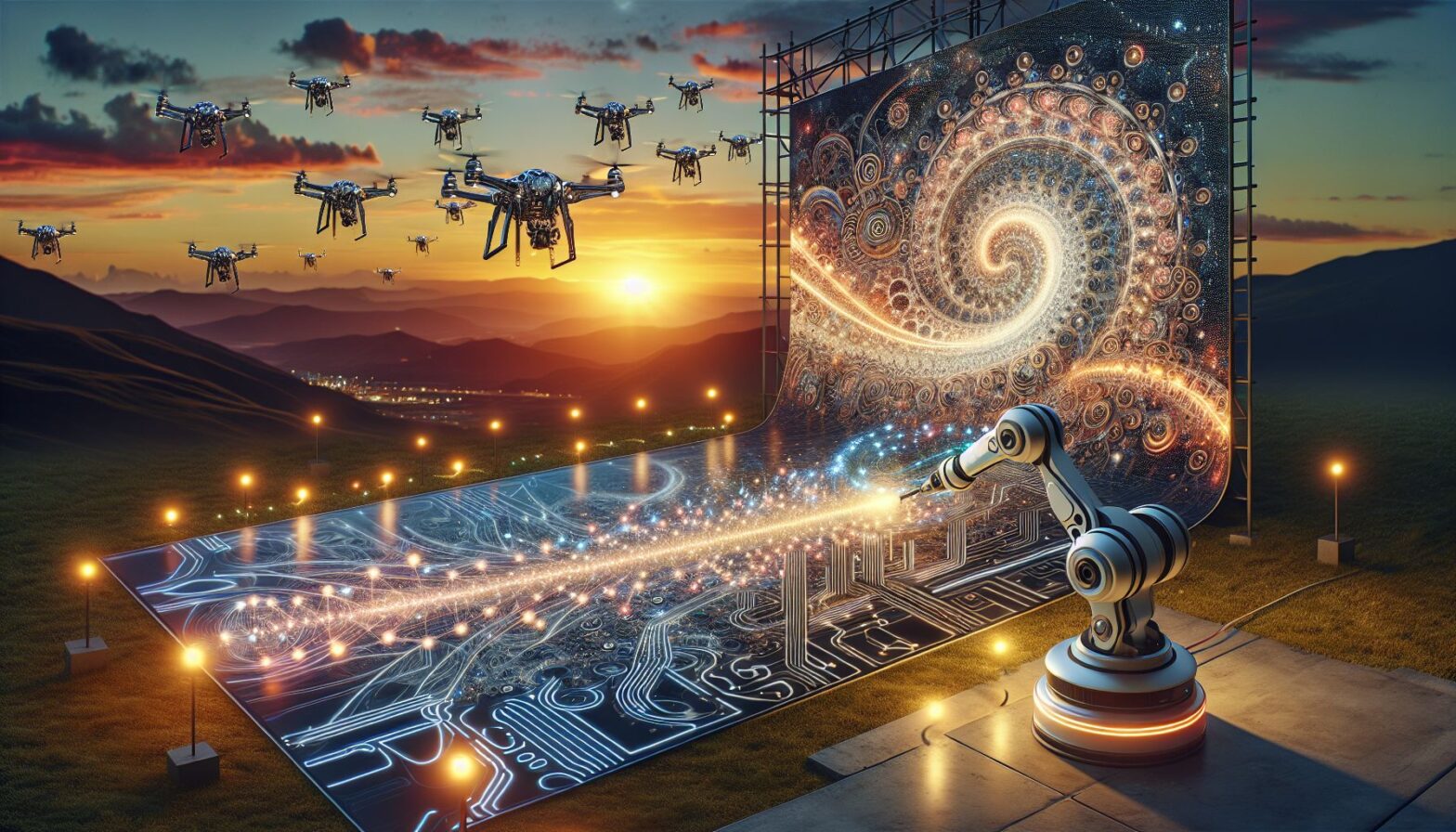
In tech circles, Artificial Intelligence (AI) has become one of those topics that gets everyone talking, whether they’re excited or worried about what’s coming next. Today, I want to dig into something that honestly fascinates me: AI that creates things. We’re talking about machines writing stories, painting pictures, and composing music. It’s weird, it’s exciting, and it’s happening right now. The question isn’t really whether AI can be creative anymore. It’s what this means for the rest of us.
Introduction: A New Dawn in Artistic Expression
For centuries, creativity felt like our thing. You know, the messy, emotional, unpredictable human thing that came from somewhere deep inside us. But now we have algorithms that can paint, write poetry, and compose symphonies. And some of this stuff is actually good. When GPT-3 started writing coherent stories or when AI-generated art started selling for millions at auction houses, it stopped being a cute tech demo. This is real.
The AI Art Movement
Here’s what surprised me most about AI art: it’s not just random computer-generated nonsense. These systems learn from massive collections of human art. Generative Adversarial Networks (GANs) have gotten scary good at this. Train one on Van Gogh’s paintings, and it can create new pieces that feel authentically Van Gogh-ish, but aren’t copies. It’s creating something that’s never existed before, in a style we recognize. That’s pretty remarkable when you think about it.
From Code to Canvas
What I find most interesting is how artists are working with AI, not against it. They’re not letting the machine do everything. Instead, they’re creating these collaborative pieces where human creativity guides machine precision. The results don’t fit into traditional categories. Is it human art? AI art? Does it matter? Some of the most compelling work I’ve seen recently comes from these human-AI partnerships that push both parties into uncharted territory.
AI in Literature: The New Age of Storytelling
Writing was supposed to be safe from automation, right? Wrong. Natural Language Processing models like GPT-3 can write in styles that are almost indistinguishable from human authors. I’ve seen AI co-author novels and help screenwriters break through creative blocks. The technology has moved way past simple text generation.
Beyond the Basics: From Narrative to Innovation
Some publishers are experimenting with AI-assisted books that adapt to readers’ preferences. The story changes based on how you engage with it. It’s like having a personalized novel that learns what you want to read next. Sure, it sounds a bit Black Mirror-ish, but readers seem to love it. We’re seeing the early stages of truly interactive storytelling that wasn’t possible before.
The Resonance of AI-Generated Music
Music production has been quietly revolutionized by AI tools. Anyone can now access sophisticated composition assistance that used to require years of musical training.
Composing the Unthinkable: AI’s Symphony
OpenAI’s MuseNet can compose pieces across genres and styles that sound genuinely musical. Not just technically correct, but emotionally engaging. I’ve heard AI compositions that gave me chills, which is something I didn’t expect to say five years ago. The technology isn’t just experimental anymore. It’s pushing into territory that challenges how we think about musical creativity.
Human Plus Machine: A New Genre of Collaboration
Musicians are using AI as a creative partner rather than a replacement. When artists hit creative walls, AI can suggest directions they never would have considered. I know producers who treat AI like a bandmate that never gets tired and always has ideas. These collaborative projects create music that neither human nor AI could have made alone.
The Ethical Landscape: Redefining Ownership and Authorship
Here’s where things get complicated. When an AI creates something, who owns it? Who gets credit? Our legal system wasn’t built for this.
Intellectual Property in the AI Era
Current copyright laws have no idea what to do with AI-generated content. If a machine creates a painting, does anyone own it? Can you copyright something that wasn’t made by a human? Some people argue that since AI doesn’t have consciousness or intent, it can’t own anything. But that ignores the real value these creations have in the market.
Redefining Creativity: A Collective Human-Machine Endeavor
Maybe we need to stop thinking of AI as competition and start seeing it as a new creative medium. Like how photography didn’t kill painting, AI might not kill human creativity. It might just give us new ways to express ideas we couldn’t explore before. The challenge is figuring out how to work with these tools while keeping what makes human creativity special.
Conclusion: Embracing the Future of Creativity
AI’s move into creative fields is one of the most fascinating things happening in tech right now. As these systems get better, their impact on art, writing, and music will only grow. But I don’t think this means less human creativity. I think it means creativity is about to get a lot more interesting. We’re heading toward a future where human imagination and machine learning work together to create things neither could accomplish alone.
We’re right at the beginning of this shift. The question isn’t whether AI can create art anymore. It’s what kinds of new art become possible when humans and machines collaborate. Are you ready to see where this goes? I’d love to hear what you think as we figure out this strange new world where creativity has no limits.