The Invisible Foundation of Digital Commerce
Modern enterprise infrastructure operates on a weird contradiction. While corporations spend billions on proprietary software licenses, security audits, and compliance frameworks, their most important systems run entirely on code written by unpaid volunteers in their spare time. This isn’t exaggeration. More than 96 percent of the world’s top one million web servers run on Linux, an operating system maintained largely by volunteers and whatever corporate engineering hours companies can spare as competitive necessity rather than genuine generosity.
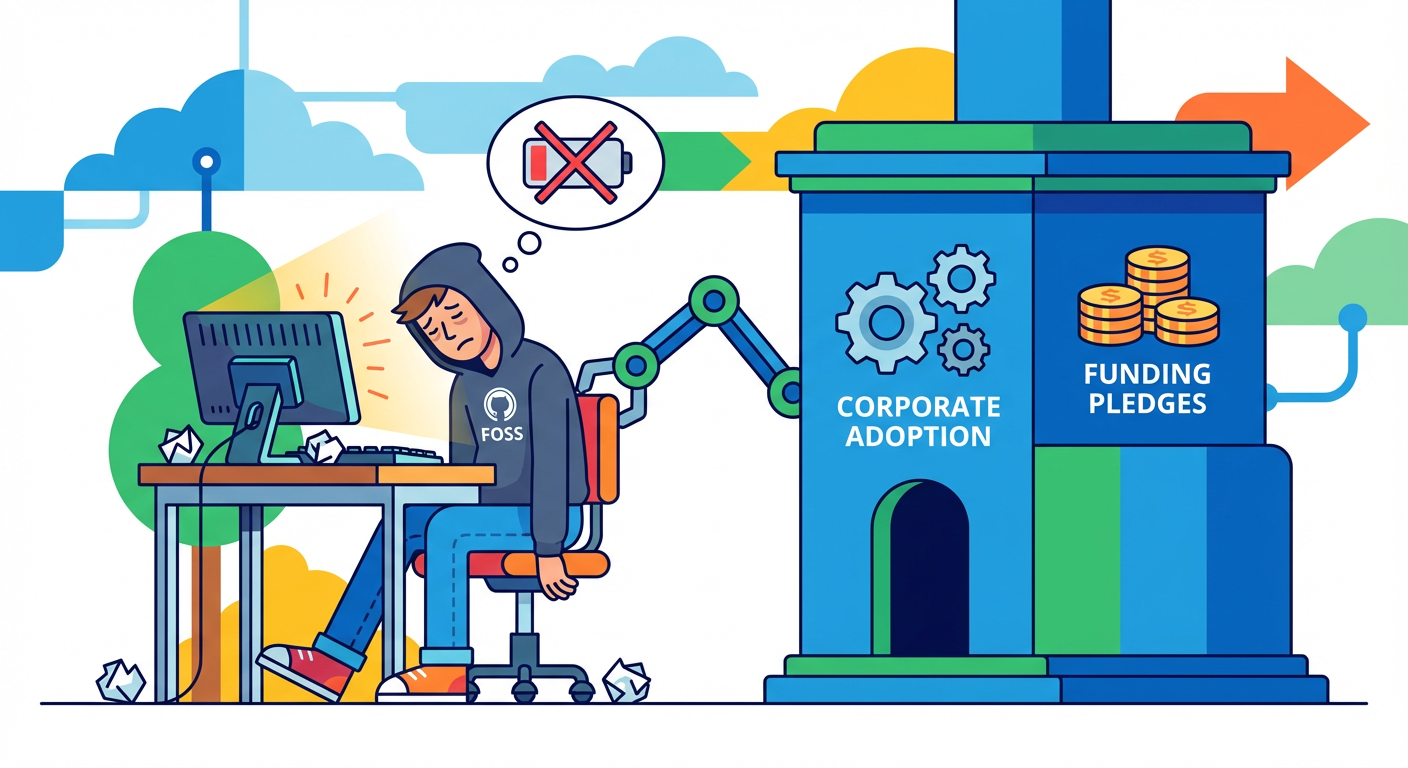
The math here is honestly disturbing. Apache web servers, Nginx load balancers, and PostgreSQL databases power enterprise operations worth hundreds of billions in annual revenue. Yet the people maintaining these projects often struggle to fund basic development needs, documentation updates, or security patches that protect corporate data worth more than entire countries’ GDP. This gap between value creation and compensation has hit a breaking point that threatens systems most organizations literally cannot replace.
The Open Source Initiative has tracked this growing strain through surveys showing maintainer burnout rates that are frankly scary. Critical projects get abandoned mid-development, leaving enterprises scrambling to fork repositories or hire emergency consultants to maintain systems they assumed would stay stable forever. Turns out the assumption that open source software equals “free” infrastructure was catastrophically wrong, as organizations discover the real cost of depending on unsustainable development models.
Corporate Awakening and Calculated Self-Interest
The sudden wave of corporate funding initiatives across the tech sector represents less genuine enlightenment than panic-driven damage control. Major cloud providers and enterprise software companies finally realized their business models fundamentally depend on keeping open source communities happy and productive, communities they’d previously ignored completely. This behavioral shift comes from direct experience with critical vulnerabilities and maintenance gaps that exposed how fragile their billion-dollar quarterly revenue streams really are.
GitHub’s sponsor program has distributed over $30 million to open source maintainers, which sounds generous until you compare it to what corporations pay for proprietary alternatives with similar functionality. These payments help individual developers, sure, but the amounts are pocket change compared to enterprise licensing fees. The program functions more like reputation management and talent recruitment than actual compensation for the economic value these projects generate.
Major corporations now run dedicated open source program offices, which shows how seriously they take community relationship management. But these initiatives focus on ensuring continued access to critical projects rather than fundamentally changing how value flows between commercial users and volunteer maintainers. The goal is still extracting maximum benefit from community-developed code while minimizing direct financial obligations or legal liability for what happens when things break.
Regulatory Pressure and Liability Reallocation
The European Union’s Cyber Resilience Act threatens to completely upend the legal framework that has protected open source developers from liability for code defects or security vulnerabilities. This legislation could impose strict liability standards on software distributed commercially, potentially including open source projects used in enterprise environments. The implications reach far beyond European markets, since global corporations typically implement compliance frameworks that meet the highest regulatory standards everywhere they operate.
Open source maintainers now face an impossible choice under these emerging regulatory frameworks. They can keep developing critical infrastructure projects while accepting unlimited legal liability for security issues discovered years after they wrote the code. Or they can abandon projects or restrict distribution to avoid commercial liability, potentially breaking the software supply chains that power modern digital infrastructure. Neither path provides a realistic way to maintain the volunteer-driven development model that created most foundational open source projects.
Regulatory focus on software supply chain security has forced corporations to audit their open source dependencies, often revealing thousands of projects with unclear maintenance status or security practices. These audits frequently identify critical infrastructure components maintained by individual developers with no formal security review processes or vulnerability disclosure systems. The gap between regulatory expectations and how open source development actually works has created compliance burdens that many projects simply cannot handle without fundamental changes to their governance and funding.
Technical Evolution and Strategic Transitions
The gradual replacement of C programming language components with Rust implementations across critical infrastructure projects shows how technical necessity drives adoption of memory-safe alternatives regardless of developer preferences or established codebases. Linux kernel development increasingly uses Rust modules for device drivers and system components where buffer overflow vulnerabilities create unacceptable risks. Amazon Web Services has migrated performance-critical services to Rust implementations that provide equivalent functionality with better security guarantees.
These technical transitions require massive engineering investments that individual maintainers or small volunteer teams cannot realistically handle. Rewriting core system components in memory-safe languages while maintaining backward compatibility and performance requires coordinated efforts from experienced development teams with dedicated funding. This technical reality forces greater corporate involvement in open source development, whether through direct employee contributions or contracted development services.
The shift toward memory-safe programming languages also highlights how security requirements increasingly drive technical architecture decisions in ways that transcend traditional open source versus proprietary software boundaries. Organizations can no longer postpone memory safety improvements indefinitely, regardless of whether their preferred solutions come from commercial vendors or community projects. This convergence creates opportunities for closer collaboration between corporate engineering teams and open source communities around shared technical goals.
Sustainable Models and Strategic Dependencies
The current move toward greater corporate involvement in open source funding and governance raises serious questions about maintaining the independence and innovation that made these projects valuable originally. Heavy corporate influence risks turning community-driven projects into corporate-controlled initiatives that prioritize commercial requirements over broader user needs or technical experimentation. The challenge is developing funding mechanisms that provide sustainable support for maintainers while preserving the collaborative development culture that drives open source innovation.
Several emerging models attempt to balance corporate funding needs with community autonomy through structured governance frameworks and diversified revenue streams. These include foundation-managed projects with corporate sponsorship, subscription-based support services for enterprise users, and dual-licensing models that generate commercial revenue while maintaining free community access. How well these models work depends on achieving sufficient scale and stakeholder buy-in to create self-sustaining ecosystems around critical infrastructure projects.
The GitHub Open Source platform has become central to these sustainability discussions by providing infrastructure for collaborative development while collecting detailed usage analytics that demonstrate the commercial value of community projects. This data enables more sophisticated funding discussions between corporate users and project maintainers, potentially leading to compensation models that better reflect actual usage patterns and business impact.
Understanding how corporate dependency on volunteer-maintained code became a systemic risk requires examining the specific technical and economic forces that created current infrastructure patterns. The sustainability challenges facing open source projects today will likely determine whether digital infrastructure remains primarily community-driven or transitions toward corporate-controlled development models that prioritize predictable funding over collaborative innovation.