The Shift Nobody Fully Prepared For
If you’ve been paying attention to the industry over the last two years, you’ve noticed something fundamental shifting beneath the surface of how we build and operate software systems. DevOps hasn’t disappeared. It’s being absorbed into something larger and more specialized. Platform engineering has moved from a boutique concern at companies like Google, Netflix, and Spotify to the expected operating model at scale. The numbers tell this story clearly. In 2023, approximately 45% of large software engineering organizations had dedicated platform engineering teams. Today, the trajectory suggests that number will reach 80% by 2026. That’s not a gradual evolution. That’s a reorganization happening faster than most teams can actually execute.
What makes this transition particularly disorienting is that it’s not primarily a technology problem. The tooling has mostly existed for years. What we’re facing is an organizational one. When I talk to engineering leaders who’ve attempted this shift, the pattern is consistent. They encounter resistance from teams who’ve spent years optimizing around DevOps principles. They struggle with undefined ownership boundaries between platform teams and product teams. They realize too late that the skills they need aren’t the same skills they have in-house. The transition from DevOps to platform engineering requires different thinking, different team structures, and fundamentally different relationships between the teams doing infrastructure and the teams shipping features.
Understanding the Performance Gap
One of the clearest indicators that this shift matters comes from hard deployment performance data. The DORA 2025 State of DevOps Report measured outcomes at organizations with mature internal developer platforms against those without. Teams with centralized platform tooling deployed 2.4 times more frequently than their counterparts. More importantly, their change failure rate dropped by 60%. That’s not marginal improvement. That’s a different class of operational capability. When you have a mature platform, developers move faster and break things less often. That combination is almost never accidental.
The mechanism behind this performance lift is worth understanding. A proper developer platform abstracts away infrastructure complexity without removing visibility. It provides golden paths for common patterns without forcing uniformity everywhere. It surfaces operational insights to developers in the context of their work, rather than requiring them to become part-time operators. When this works, developers spend more time on features and less time fighting with infrastructure. They fail less because the platform has already captured lessons learned from previous failures. But achieving this requires a specific set of capabilities that traditional DevOps teams, organized around operational support, rarely possess by default.
The Adoption Spike and What It Reveals
The clearest signal of this shift going mainstream is visible in specific tooling adoption patterns. CNCF Backstage adoption data shows what happens when the industry settles on a standard approach. Over 3,200 organizations have adopted Backstage, Spotify’s open-source developer portal framework. That adoption rate indicates we’ve moved past experimentation and into convergence. When this many organizations independently choose the same tool, they’re usually solving the same problem. Here, that problem is the need for a central, unified interface where developers can access platform capabilities without needing to understand the underlying complexity.
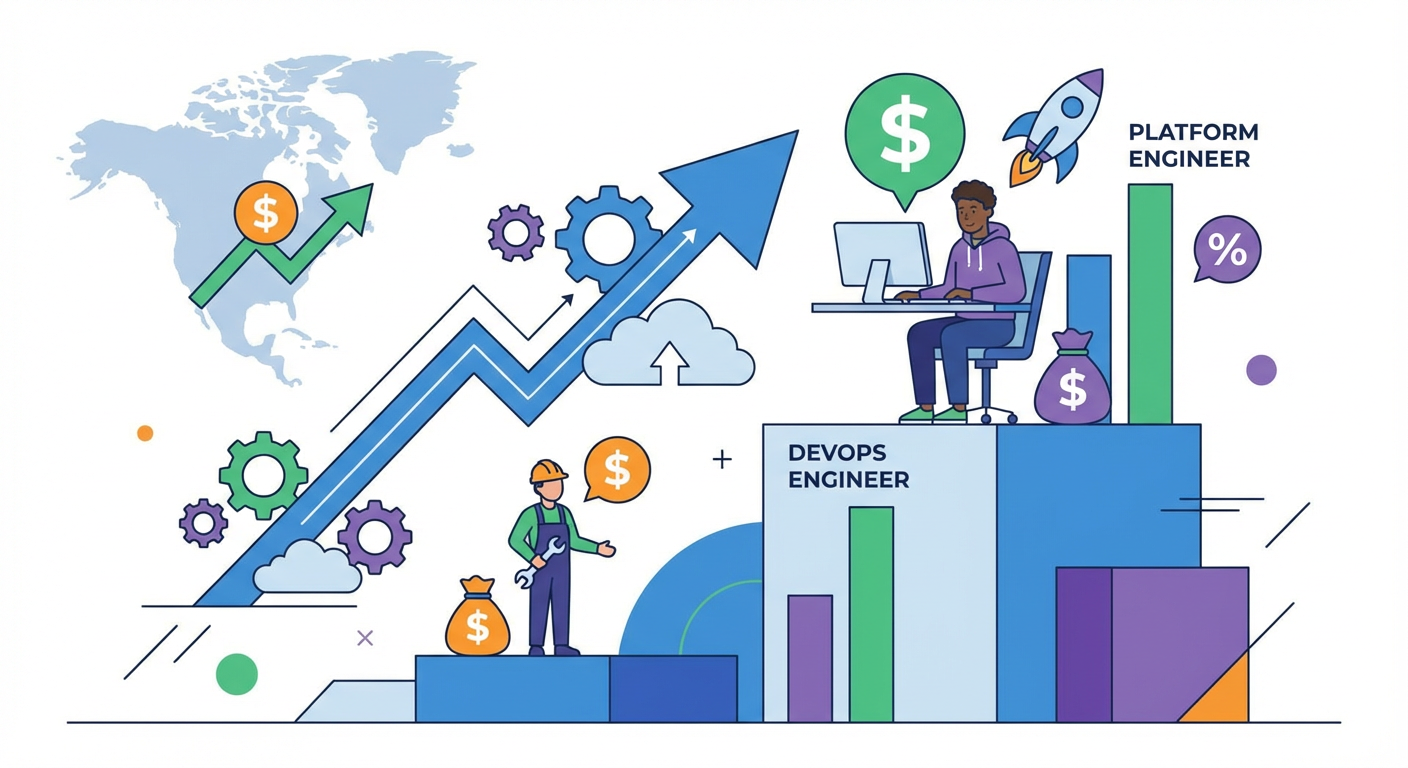
Adoption numbers alone don’t tell the full story, though. They tell you where the industry is moving. They don’t tell you whether your organization is prepared for that movement. Compensation data fills in the rest of the picture. Platform engineer positions now command median salaries around $178,000 in North America, outpacing traditional DevOps engineer roles by approximately 14%. Job growth in this role consistently puts it in the top five fastest-growing titles across the industry. The market has already decided this is the future. Organizations that haven’t made this transition are competing for talent who could be competing for them. That’s a warning signal many teams are still ignoring.
Why Organizations Are Actually Failing
Here’s where the pattern becomes clearest and most actionable. When platform engineering transformations fail, they almost never fail because the technology doesn’t work. The problems are organizational and almost always human. Recent analysis shows that 67% of organizations attempting platform engineering transformations cited internal team resistance and unclear ownership boundaries as their primary failure mode. Not technical debt. Not tooling limitations. Not architecture challenges. Organizational friction and unclear roles. You can’t tool your way out of this problem.
The failure mode typically follows a predictable path. An organization decides to build a platform team. Leadership treats it like a new DevOps team, maybe with slightly broader scope. That team starts building abstractions and tooling. Meanwhile, the product teams haven’t changed their expectations about what they need from infrastructure. The platform team still gets paged at 3 AM for production incidents even though they’re supposed to be building capabilities, not operating systems. Product teams push back on the standard patterns the platform team is trying to establish because the patterns feel constraining. Nobody owns the transition itself as a distinct problem requiring its own effort and governance. Within six months, the platform team is exhausted and functioning as DevOps with extra overhead. Within a year, the transformation is quietly shelved and everyone goes back to the way things were.
What Actually Needs to Change
The shift from DevOps to platform engineering requires specific organizational moves that most teams haven’t made. First is clarity on what the platform team actually owns. They own the developer experience. They own the standard deployment patterns. They own the observability and operational tooling that developers use daily. They do not own operating production systems in the traditional sense. That’s a fundamental difference. Second is the change to the product team’s relationship with infrastructure. They are now customers of the platform. The platform team’s job is to reduce their cognitive load and remove obstacles to shipping. This requires product teams to accept constraints and standardization in places where they previously had freedom.
The third change is governance and funding. Platform work cannot be funded the same way feature work is funded. A feature team that ships ten features in a quarter has done good work. A platform team that ships ten features has probably failed because they weren’t focused on building the platform. This requires different success metrics, different planning cadences, and different organizational reporting lines. Finally, there’s the skill gap. Platform engineers need to understand distributed systems deeply. They need to understand developer tooling and workflow. They need to have strong opinions about standardization and strong arguments for why those opinions matter. They need to be part architect, part toolsmith, part operator. They’re not traditional DevOps engineers who’ve been upskilled. They’re a different role with different DNA.
The organizations executing this transition successfully are the ones that have treated it as a genuine organizational redesign. They’ve made deliberate choices about what the platform team owns and doesn’t own. They’ve worked with product teams on the transition, not just announced it. They’ve given platform teams the space to actually focus on platform work. They’ve measured success through developer experience metrics and operational outcomes, not feature velocity. If your organization is considering this shift, take those practices as your template. The technology will follow. The organization comes first.